

Creating Impact Through Light: The Role of Integrated Lighting in Reception Furniture

Lighting might not be the first thing you notice when you walk into a reception area, but it plays a vital role in shaping how the space is experienced.
From creating a welcoming atmosphere and reinforcing brand identity to highlighting architectural features and improving functionality, lighting shapes how people experience a space.
Whether used to accentuate material finishes or as a statement design feature, subtly integrated lighting has become an increasingly important element of modern reception furniture design.
Why Lighting Matters
Lighting does far more than simply illuminate a space. A considered strategy — balancing colour temperature, intensity, placement and integration — can influence how visitors read a reception area, where their attention is drawn and how they feel when they arrive. It helps establish visual hierarchy, highlight architectural features, reinforce brand identity, and support the practical needs of the people who use the space every day.
These layers each serve a distinct purpose, combining to create a reception environment that is both visually appealing and highly functional.
Understanding the Three Layers of Lighting
Ambient Lighting
Ambient lighting forms the foundation of the lighting scheme, providing overall illumination and establishing the mood against which accent and task lighting can be layered.
Accent Lighting
Accent lighting is used to create visual interest and draw attention to specific features.
Within reception furniture, this may include illuminated plinths, backlit logos, feature lighting integrated into desk fronts or concealed lighting that highlights material details and architectural forms.
Accent lighting can reinforce branding, showcase premium materials and highlight craftsmanship. Used effectively, it transforms a reception desk from a functional element into a focal point that helps define the overall reception experience.
Task Lighting
While aesthetics are important, reception desks must also function effectively for the people using them every day.
Task lighting provides focused illumination for specific activities, helping reception staff work comfortably and efficiently throughout the day.
As Bradley Fielden, Sales & Marketing Director at Clarke Rendall, explains:
"While feature lighting can create visual impact, the people working behind the desk still need adequate illumination to perform their role comfortably throughout the day."
Task lighting can be discreetly integrated into the reception desk, providing sufficient light for staff without increasing the overall brightness of the space.
The most successful reception environments combine ambient, accent and task lighting. Together, these layers create atmosphere, draw attention to key features and ensure the space functions effectively for both visitors and staff.
Integrating Lighting into Reception Furniture
Modern lighting technology offers designers a wide range of possibilities when incorporating lighting into bespoke reception furniture.
Common applications include:
· Illuminated plinths that create a floating appearance.
· Backlit logos and branding elements.
· Concealed under-counter lighting.
· Feature lighting integrated within desk frontages.
· LED light sheets are used to illuminate larger surfaces.
· Integrated task lighting within the user side of the desk.
Advances in LED technology have also increased flexibility, allowing for smaller profiles, improved durability, greater control and more seamless integration within furniture designs.
The result is greater freedom to develop bespoke lighting solutions that complement both the reception furniture and the wider interior design scheme.
Where required, modern reception furniture can also be integrated into wider building lighting systems. Where required, Clarke Rendall can incorporate DALI-compatible lighting solutions, allowing reception desk lighting to be controlled alongside the wider lighting scheme for greater consistency and ease of management.
Why Colour Temperature Matters
One of the most important considerations when specifying integrated lighting is colour temperature.
Measured in Kelvin (K), colour temperature determines whether light appears warm, neutral or cool. Generally speaking:
· 2700K–3000K creates a warm, welcoming atmosphere.
· 3500K–4000K provides a balanced, neutral appearance.
· 5000K and above deliver a cooler, brighter and more clinical feel.
The chosen colour temperature can significantly influence how materials, finishes and branding are perceived.
As Bradley explains:
"A reception desk finished in oak, stone or solid surface can look dramatically different under warm or cool lighting. We work closely with clients to specify colour temperatures that complement the chosen materials, create the right atmosphere and ensure brand elements are presented consistently throughout the space."
For organisations with strict brand guidelines, lighting specification can become just as important as material selection.
Delivering Real Solutions for Clients
Clarke Rendall has integrated lighting across a range of reception furniture projects, using it to highlight materials, reinforce brand identity and support the wider interior design scheme.

Project Spotlight: Credit Suisse, Folgate Street
Clarke Rendall's reception project for Credit Suisse at Folgate Street, London, delivered in collaboration with Corley Woolley and Tate Hindle Architects, demonstrates how integrated lighting can enhance a refined material palette.
The desk combined crown-cut American white oak veneer, dark grey micro concrete and brushed stainless steel finishes, with concealed LED lighting integrated beneath the worktop. Thirty 4000K LED fittings were specified to subtly highlight the desk's architectural detailing and material contrasts.
Rather than dominating the design, the lighting complemented the oak, concrete and stainless steel finishes, helping create a balanced, understated reception environment.
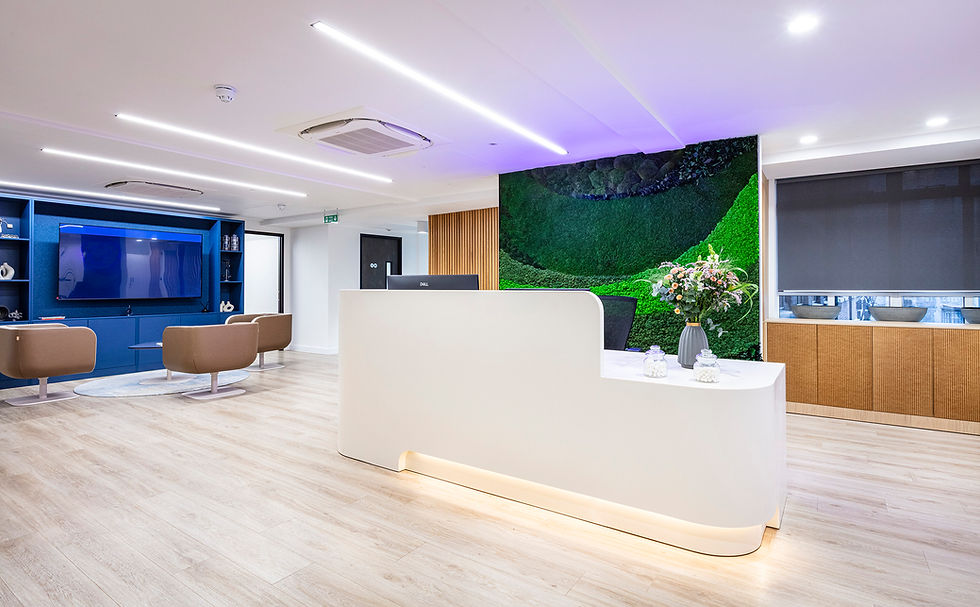
Project Spotlight: Height Adjustable Reception Desk
Finished in 12mm Bone Corian solid surface with Sand Beige Egger laminate to the internal surfaces, the desk used durable, neutral finishes suited to a busy reception environment. LED lighting was integrated into a feature recess in the front plinth, adding visual interest while supporting the clean, contemporary design.
The project demonstrates how integrated lighting can enhance contemporary reception furniture while complementing broader considerations of accessibility, ergonomics, and user experience.
Designing Reception Spaces That Leave a Lasting Impression
By considering lighting from the earliest stages of the design process, organisations can create reception environments that balance aesthetics, functionality and brand identity.
At Clarke Rendall, we work closely with architects, designers and contractors to integrate lighting seamlessly into bespoke reception furniture, helping create memorable first impressions and more engaging visitor experiences.
Whether you're developing a completely bespoke reception desk or exploring options from Clarke Rendall's Standard range, integrated lighting can help create a more engaging, memorable and functional reception environment.
To discuss your project or learn more about the Light reception desk range, get in touch with the Clarke Rendall team.


